
- Home
- Hokkaido, Japan
- Winning Strategies for Japan Real Estate Investment (2025)
Review of Winning Strategies for Japan Real Estate Investment 2025
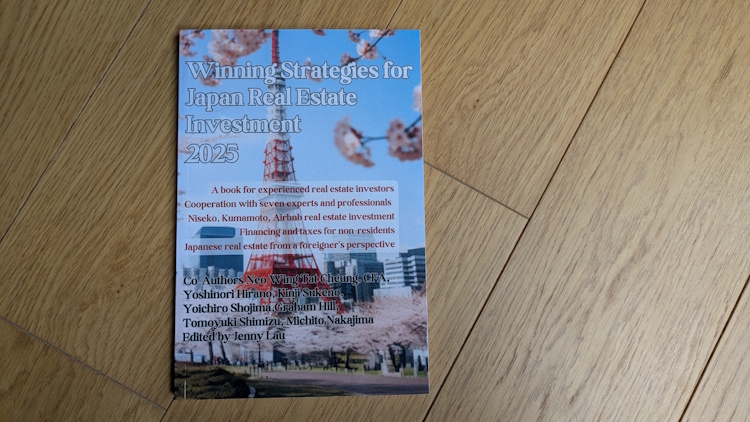
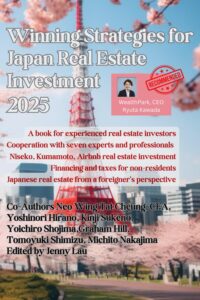 As part of our lists of books about Japanese real estate, we present this review of the book Winning Strategies for Japan Real Estate Investment 2025, by Neo Cheung, with contributions from several other authors. In this particular case, Hokkaido Agents is honored to have contributed the chapter in this book on Hokkaido real estate investment. Below we present our full review of the book, including selected highlights to entice you to read the book for yourself.
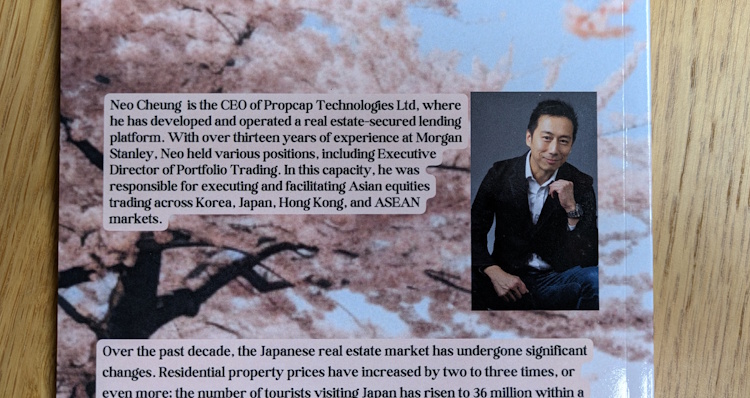
Winning Strategies for Japan Real Estate Investment 2025 contains all original content, building on the success of the previous edition with the same name (Winning Strategies for Japan Real Estate Investment 2017). This book is largely a product of Neo Wing Tat Cheung, and features contributions from Yoshinori Hirano, Kinji Sukeno, Graham Hill, Tomoyuki Shimizu, Shinichiro Heda, Michito Nakajima, Yoichiro Shojima, Jenny Lau, and Ryuta Kawada.
2025 Edition of Winning Strategies for Japan Real Estate Investment
- Recent Changes in the Japanese Real Estate Market
- Investors from Asian Countries Buying Property in Japan
- Real Estate Investments in Osaka
- A Chapter Dedicated to Real Estate Investment in Hokkaido
- Real Estate Investment Properties in Fukuoka
- Kumamoto Real Estate Investment Opportunities
- How the Semiconductor Industry Will Impact Real Estate in Japan
- Tips for Real Estate Investors in Japan
- Real Estate Agents and International Real Estate Investors in Japan
English-Version of Winning Strategies for Japan Real Estate Investment 2025
This updated version brings together the expertise of seven professional authors, including my long-time friend Neo, whose deep market understanding adds unique value. With three new contributors joining our team, the book offers a diverse range of perspectives that captures the complex dynamics of Japanese real estate investment.
— Ryuta Kawada, WealthPark
This 2025 edition is published in threes languages; in English, Japanese, and Chinese.
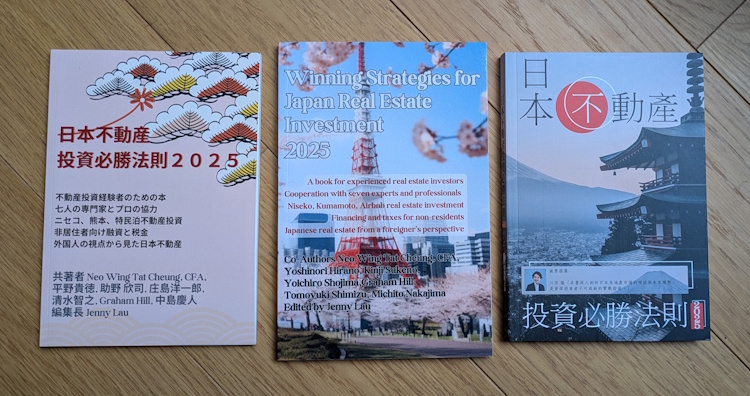
This 2025 edition of Winning Strategies for Japan Real Estate Investment begins with an excellent introduction by Neo Cheung himself. For our own reading, Cheung’s sections were some of the most interesting and informative parts of the book.
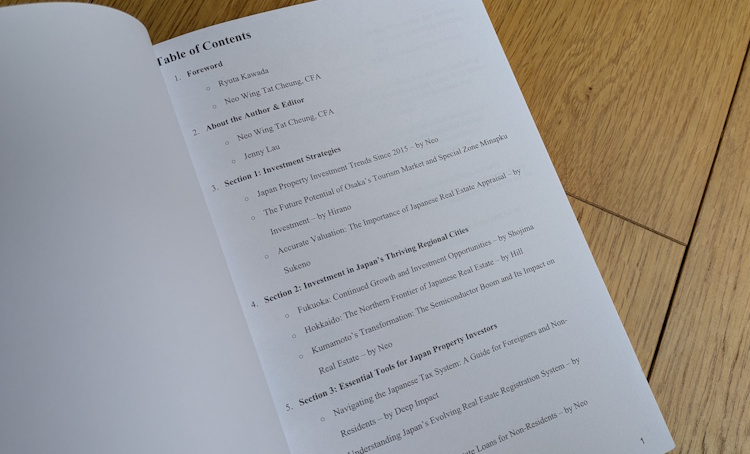
The English version is 128 pages, divided in three sections:
— Part One: Investment Strategies in Japanese Real Estate
— Part Two: Investing in Japan’s Thriving Regional Cities
— Part Three: Essential Tools for Japanese Real Estate Investors
Recent Changes in the Japanese Real Estate Market
Author, investor, and entrepreneur Neo Cheung sets the stage with an overview of the current trends in Japanese real estate; including world events like the impact of Covid on the Japanese real estate market, as well as the soft value of the Japanese yen versus foreign currencies.
The exchange rate of the US dollar to the yen increased from 105 yen per dollar in 2021 to 150 yen in 2023, making Japanese real estate 40% cheaper for overseas investors.
— Neo Cheung
This is a book about investing in Japanese real estate and offers several insider perspectives, written to be useful to foreign investors in particular:
Investment strategies among non-resident foreign investors in Japanese real estate have evolved from a single-focus approach to a more diversified strategy.
— Initial investments: Most non-resident foreign investors initially chose to invest in residential apartments with relatively low entry barriers, aiming to secure stable rental income.
— Advanced investments: As they gain experience, some investors shift their focus to hotels and inns, aiming to capitalize on the growth of Japan’s tourism industry.
— Experienced investors: More seasoned investors opt to purchase land for development, seeking higher investment returns.
— Neo Cheung
That is true. In our recent article about real estate investment strategies for Sapporo, we point to a similar path; many investors begin by buying a second home or a condominium for investment in Sapporo, graduating to multi-family income generating properties in Hokkaido as they become more sophisticated real estate investors.
We recently profiled several examples of actual real estate investment properties in Sapporo, which offers investors more context about Sapporo properties for investment, their quality, the price, etc.
Investors from Asian Countries Buying Property in Japan
Cheung’s introduction provides excellent notes on why foreign real estate investors show so much interest in Japan’s real estate.
In the mid-2010s, investors from Hong Kong and Singapore began flooding into the Japanese real estate market. Similar to Taiwanese investors, they also preferred residential apartments in major cities like Tokyo and Osaka. The rental yields in central Tokyo were around 4 – 5%, offering greater appeal compared to the 2 – 3% yields in Hong Kong and Singapore.
— Neo Cheung
While Tokyo’s property prices are prohibitively high for many investors (and 4% rental yield is not attractive compared to other cities in Japan), the ongoing concentration of Asian real estate investors in Japan is still true in 2025 and 2026.
According to GA Technologies (located in Minato-ku, Tokyo), which operates a platform that connects investors from greater China with Japanese real estate, Japan is the top investment destination for investors from China, Taiwan, and Hong Kong.
— Kinji Sukeno
Perhaps because the 1990’s real estate bubble in Japan created such low expectations for appreciation of Japanese real estate, prices for Japanese investment properties have remained relatively low (compared to the income from rental properties), and the potential for investors to earn greater returns on Japanese properties remains high.
According to the Japan Real Estate Institute, when setting the price of a luxury condominium in Moto-Azabu, Tokyo at 100, the index is 263.4 for Hong Kong, 160.7 for Taipei and Shanghai, and 137.3 for Singapore. This indicates that Hong Kong’s prices are more than 2.5 times higher than Tokyo, and prices in Taipei and Shanghai are 60% higher.
— Neo Cheung
As the book continues, there is less to say about Tokyo (which may represent less opportunity for strong returns for investors); opportunities to buy property in Osaka and several other locations for investment in Japan, are discussed in some detail. For investors that might be interested, we recently reviewed six examples of investment properties for sale in Kobe.
Real Estate Investments in Osaka
Cheung tees up the excitement about real estate investment in Osaka with these notes about Osaka land prices.
As for land price changes, Osaka’s Chuo Ward saw an increase of 11.32%, while the Osaka Nishi Ward saw an even higher increase of 14.21%.
— Neo Cheung
Winning Strategies for Japan Real Estate 2025 has an entire chapter dedicated to Osaka called, “The Future Potential of Osaka’s Tourism Market and Special Zone Minpaku Investment.” Author Hirano Yoshinori provides an updated perspective on Osaka’s place in the perceptions of the best real estate investment opportunities in Japan.
In advanced Asian countries like Hong Kong and Taiwan, the average return on real estate investment is said to be between 1% and 3%. On the other hand, in Japan, while the return in areas like Ginza in Tokyo can be below 3%, it generally ranges from 3% to 5% in Tokyo and from 3.7% to 6.5% in Osaka.
— Hirano Yoshinori
Yoshinori’s focus is on hotels and short-term accommodations rental business in Osaka (called minpaku, in Japan).
In addition to hotels and inns, new types of accommodations such as hostels, serviced apartments, and private lodgings (minpaku) are also increasing in Osaka’s accommodation market. Minpaku offer convenience to tourists by accommodating shorts stays and individual needs.
— Hirano Yoshinori
Buying real estate in Osaka for Airbnb-style rental income is indeed a common strategy; a common type of investment property in cities across Japan.
When operating an entire apartment building as a Special Zone Minpaku, economies of scale come into play, allowing for reduced operating cost per unit, which enhances overall profitability.
— Hirano Yoshinori
In addition to his notes on minpaku investments in Osaka, he provides excellent background on the importance of the Kansai International Airport, the impact of the 2025 Osaka World Expo, the development of an artificial island of Yumeshima in Osaka’s Konohana ward, and the ongoing plan for the full-service casino in Osaka (a project of MGM and Orix).
The opening of an Integrated Resort (IR) casino is planned for 2030, which is also expected to have a major impact on Osaka’s tourism industry. The IR casino will target high-income tourists and those seeking long-term stays, leading to the development of accommodation facilities to cater to this demand. The IR casino is expected to include not only lodging, but also entertainment facilities and shopping malls, further diversifying and enhancing the appeal of Osaka’s tourism sector.
— Hirano Yoshinori
Yumeshima and the IR Casino in Osaka will undoubtably have a major impact on the city, driving tourism, but also attracting clientele that will want high-end residences such as luxury condominiums in Osaka, and more. As Osaka elevates its profile to that of a premier international city, Osaka’s real estate market is gaining momentum.
We recently reviewed some investment properties for sale in Osaka. We can also recommend OsakaCity.com‘s resources for English-speaking visitors to Osaka.
A Chapter Dedicated to Real Estate Investment in Hokkaido
In the introduction to Winning Strategies for Japan Real Estate Investment 2025, Cheung includes a reference to investment property in Niseko and Hokkaido:
The investment regions also became more diverse, with interest extending beyond traditional popular cities like Tokyo and Osaka to other areas rich in tourism resources, such as hot springs and golf courses. For example, Niseko in Hokkaido attracted many Chinese investors looking for vacation properties thanks to its exciting skiing and natural scenery.
— Neo Cheung
Cheung asked us to contribute a chapter that would help foreign investors see more of the potential of investment property in Hokkaido.
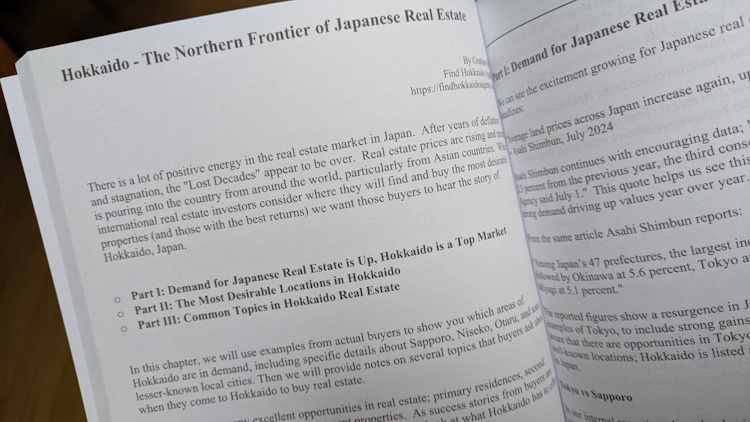
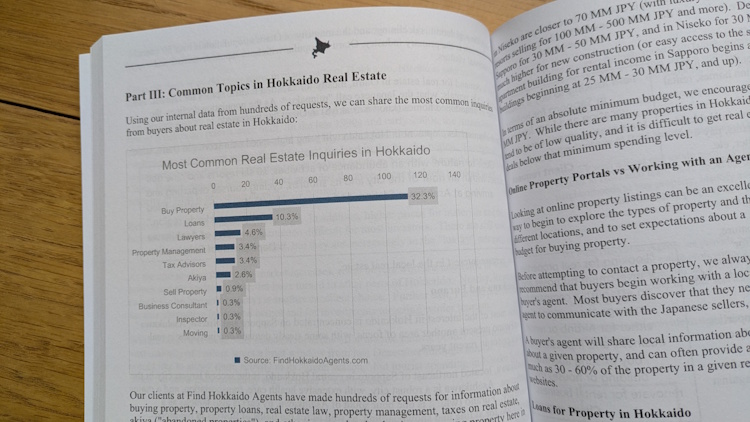
For our chapter we analyzed hundreds of client requests and questions. From that data we divided the chapter into three sections, including an analysis of the most desirable locations in Hokkaido (based on actual requests from our clients); that section included comments about investment property in Sapporo, Otaru, and Niseko, as well as additional details on real estate investment in Asahikawa, Furano, and Yoichi. We then turned our attention to addressing the most common topics where our clients sought help; buying property in Hokkaido, budgets, loans for real estate, online listings for property in Japan, property management in Sapporo, the “minpaku” Airbnb rental property strategy, akiya in Hokkaido, and more.
Our deep thanks and appreciation to Neo Cheung for the opportunity to contribute to this latest edition.
Real Estate Investment Properties in Fukuoka
In both the 2017 edition and this 2025 edition of Winning Strategies for Japan Real Estate, Fukuoka stands out as an important location for Japanese real estate investors.
One objective reason why Fukuoka investment property offers unique value to investors is that Fukuoka is a young city (the average citizen is much younger than in most cities in Japan), and the population is actively growing.
This population growth is projected to continue until 2040, reaching 1.7 million people.
— Yoichiro Shojima
Cheung himself doubles-down on the topic of investing in Fukuoka real estate, adding additional comments about the potential of Fukuoka as a vital city in Japan, and how that has affected the price of real estate in Fukuoka.
In 2024, Fukuoka boasts the highest average land price increase in Japan, making 12 consecutive years of growth and surpassing both Tokyo and Osaka. In recent years, Fukuoka has been highly regarded as a desirable city to live in. While Japan faces a declining population, Fukuoka stands out with the highest growth rate of young residents in the country.
— Neo Cheung
The city of Fukuoka is thriving, and the rates of return for real estate investors in Fukuoka are higher than comparable opportunities in Tokyo and Osaka.
Real Estate Investment Opportunities in Kumamoto
From our perspective as real estate advisors in Japan, the most intriguing chapter in the book was Cheung’s section on Kumamoto, titled “Kumamoto Transformation: The Semiconductor Boom and its Impact on Real Estate.”
While many people believe that Tokyo and Osaka are the top choices for investing in Japanese real estate, recent signs indicate that Kumamoto is emerging as a prominent promising investment hotspot.
— Neo Cheung
Cheung builds his case for buying real estate investment property in Kumamoto around the development of semiconductors at the TSMC semiconductor plants already in operation in the area.
With the upcoming completion of TSMC’S second plant and the arrival of other manufacturers in Kumamoto Prefecture, the real estate market in Kumamoto is poised for a new wave of growth driven by significant demand for housing.
— Neo Cheung
That chapter begins with a compelling comparison of the semiconductor industry to early technology hubs such as Silicon Valley in the United States, and Nanshan Science and Technology Park in China.
[C]onstruction is visible everywhere. However, the limited land supply has kept residential prices high. In fact, high-end apartments are rare in Kumamoto City with most buildings being two- to three-story small residences.
— Neo Cheung
How the Semiconductor Industry Will Impact Real Estate in Japan
Reading through Cheung’s notes, he is interesting when he talks about semiconductors and recent efforts to make Japan increasingly relevant in that industry.
In the 1980s, Japan was hailed as a semiconductor powerhouse, with five of the world’s top 10 semiconductor manufacturers being Japanese companies, including Toshiba, NEC, and Hitachi. The Japanese government is now investing heavily hoping to regain its leadership in advanced semiconductor manufacturing with the help of TSMC.
— Neo Cheung
And the potential of investing in real estate near semiconductor factories in Japan is not limited to Kumamoto. Cheung does not mention it in Winning Strategies for Japan Real Estate 2025, but there is also new semiconductor factory activity in Hokkaido. The Rapidus semiconductor factory in Chitose, Hokkaido, has already created yet another spike in interest in Hokkaido real estate investment.
Tips for Real Estate Investors in Japan
There are so many other excellent topics in Winning Strategies for Japan Real Estate 2025, each written by a various local experts in Japanese real estate.
There is an excellent chapter on real estate valuation by Kinji Sukeno (see what he says about “one property, four values”). In a chapter by Shinichiro Heda (a CPA with a background in Japanese real estate), there are good notes about a tax agent for real estate in Japan, as well as excellent notes on property taxes in Japan. There are other details in a specific chapter about property registration (by Nakajima Michihito), including notes about the role of the Legal Affairs Bureau in property registration (for more on that topic, see our review of the book Real Estate Transactions in Japan).
Cheung also includes several of his own comments about loans for foreigners buying real estate in Japan, saying “typically limited to major cities such as Tokyo and Osaka, and the purposes are primarily residential.” That is what we see with our own clients.
He adds this comment, which may interest a broader range of investors:
When processing an application… regardless of whether the property’s price is high or low, the effort and time spent by the bank is similar. Thus, banks tend to favor large loan amounts and are less inclined to process small loan applications. Therefore, the larger the loan amount, the easier it is to find financing.
— Neo Cheung
Cheung’s comments throughout the book are excellent.
Real Estate Agents and International Real Estate Investors in Japan
To wrap up our review, we present these comments about the role of real estate brokers in Japan helping foreign real estate investors in Japan to avoid common mistakes.
Properties that significantly violate building regulations, do not meet road access requirements, or have underground obstacles or disputes with adjacent land are generally avoided by Japanese investors when these issues are properly explained. However, when these issues are not properly explained to foreign investors, they often find such properties attractive to their perceived affordability. As a result, many foreign investors end up purchasing these problematic properties.
— Kinji Sukeno
Sukeno’s comments are exactly what we see in the market; we see a continued trend of newcomers that want to buy property for investment in Japan, that try to find property online, and then manage the transaction on their own (without a buyer’s agent). Foreigners use online property listings in Japan, shop by price, and then run into trouble as they cannot identify or understand inherent problems with the property. They almost always struggle to communicate.
Sukeno is giving good advice when he says, “I urge you to seek out an agent who prioritizes protecting the interest of foreign investors and does not have conflicts of interest.” He is talking about dual-agency in Japan when he makes that comment. You can read his chapter to learn more.
As always, if you’d like help finding a real estate broker to find investment property in Hokkaido – contact us. We’re happy to help.

We work for you, not the real estate companies.
We provide person-to-person introductions to prescreened agents that help you sell, buy, lease, or rent property in Hokkaido. We search our custom database to connect you to real estate professionals that speak your language, address your needs and are available now to help you find what you want.
Local. Trusted. 100% free to you.
To Get Started
For More Information:
— Different Real Estate Investment Opportunities in Sapporo
— See our piece about various Taxes in Japan
— Our detailed Guide to Paying Property Taxes in Japan
— We provide a list of Sapporo Tax Offices
— In Hokkaido, there are areas with special rates for property taxes
— Our review of the role of Property Management Companies in Sapporo
— Buying Property in Hokkaido as a Foreigner
— Our list of Tax Accountants for Expats Living in Japan
— Our complete guide for Buying a House in Sapporo
— Our report on How to Rent an Apartment in Sapporo and Move-In Costs for Sapporo Apartments
— Find Lawyers in Hokkaido
— Tax representatives in Japan
— Services that Help Foreigners Buy International Real Estate
See also:
— Examples of rental properties in Osaka City, Japan
— Guide to buying real estate for investment in Osaka
— Types of investment property in Osaka, Japan
— Off-market Properties in Osaka
— Examples of investment property for sale in Kobe, Japan
— A guide to the concept of Domestic Contacts in Japanese Real Estate